
Lifting Clutch
Short Description:
Lifting Clutch is a mechanical lifting accessory used with compatible lifting anchors for handling precast concrete elements. It provides a connection between the embedded lifting anchor and lifting equipment, supporting lifting, positioning, and handling operations when the compatible components are correctly selected and used.
Product Details
Product Introduction
Lifting Clutch is a reusable lifting accessory designed to work with compatible lifting anchors in precast concrete lifting systems. It provides the connection between an embedded lifting anchor and lifting equipment, allowing precast concrete elements to be lifted and handled during production, transportation, or installation.
The clutch engages with the head of the compatible lifting anchor and provides a mechanical connection for the lifting operation. Depending on the lifting system and component configuration, the connection can accommodate different lifting directions and handling requirements.
Correct compatibility between the lifting clutch and lifting anchor is essential. Buyers should select the clutch according to the corresponding anchor type, load group, lifting conditions, and manufacturer requirements.
Key Features
- Lifting Anchor Connection — Designed to connect compatible lifting anchors with lifting equipment during precast concrete handling.
- Mechanical Engagement — Provides a mechanical connection with the compatible lifting anchor for lifting operations.
- Reusable Lifting Accessory — Designed for repeated use in compatible precast concrete lifting applications when the component remains in suitable condition.
- Flexible Handling — Supports lifting and handling operations where the compatible lifting system allows changes in lifting direction or element orientation.
- Precast Concrete Application — Designed for lifting and handling precast concrete elements using compatible lifting anchor systems.
- Compatible System Design — The clutch should be selected according to the corresponding lifting anchor type and load group to ensure proper engagement.
How It Works
The Lifting Clutch is connected to a compatible lifting anchor that has been embedded in the precast concrete element.
The clutch is positioned over the exposed anchor head and engaged according to the specific lifting system design. Once the connection is correctly engaged, the lifting equipment can be connected to the clutch for handling the precast element.
During lifting, the load is transferred through the lifting clutch to the compatible lifting anchor and then into the precast concrete element.
After the lifting operation is completed and the load has been released, the clutch can be disengaged from the lifting anchor according to the manufacturer’s operating procedure.
The actual engagement, lifting direction, and release procedure depend on the specific lifting clutch and compatible anchor system.
Applications
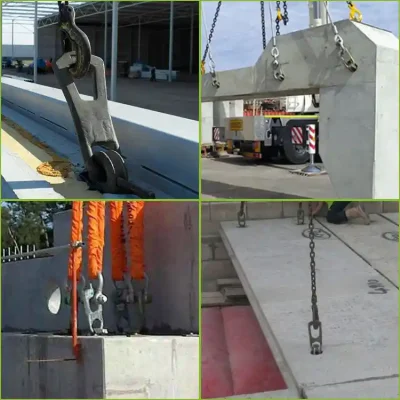
Lifting Clutches are used with compatible lifting anchors for handling precast concrete elements.
Typical applications include:
- Precast concrete wall panels
- Precast concrete slabs
- Precast concrete beams
- Precast concrete stairs
- Precast concrete components requiring lifting points
- Factory handling and demoulding operations
- Transportation and installation of compatible precast elements
Product Specifications
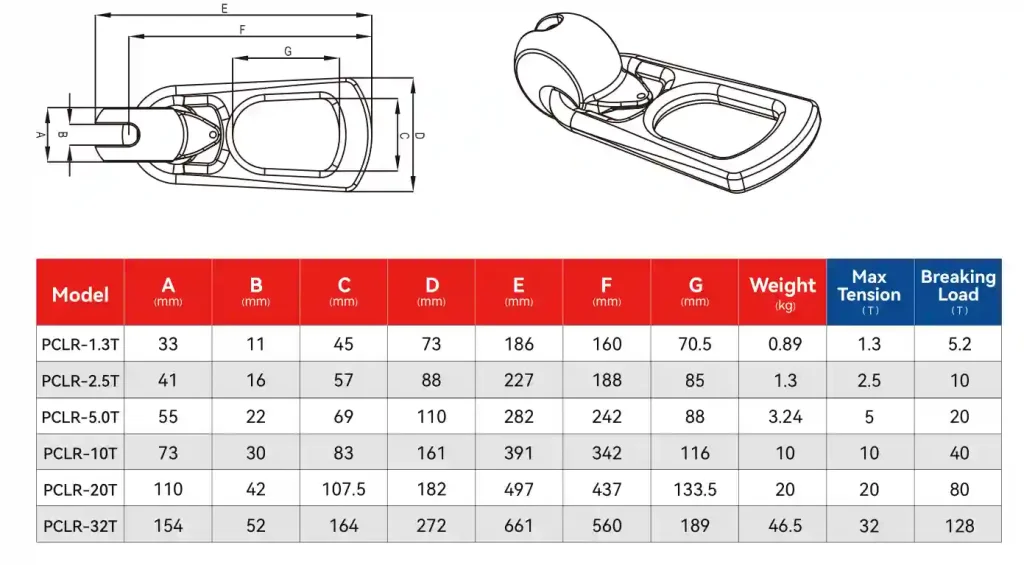
Please refer to the specification table below for the available models, dimensions, load groups, and technical parameters of the Lifting Clutch.
Selection Considerations
Before selecting a lifting clutch, buyers should confirm:
- Anchor Compatibility — Confirm that the lifting clutch is designed to engage with the specific lifting anchor type being used.
- Load Group — Check that the clutch and compatible lifting anchor belong to the appropriate load group for the intended lifting application.
- Lifting Conditions — Consider the weight and geometry of the precast element, lifting direction, and actual handling conditions.
- Connection Method — Confirm the engagement and release method according to the lifting system design and manufacturer instructions.
- Component Condition — Inspect the lifting clutch and compatible lifting components for visible damage, excessive wear, deformation, or other conditions that could affect safe use.
- Application Requirements — Confirm that the selected lifting system is suitable for the intended precast concrete element and lifting operation.
FAQ
What is a Lifting Clutch?
A Lifting Clutch is a mechanical lifting accessory used with a compatible lifting anchor to connect lifting equipment with a precast concrete element.
What is a Lifting Clutch used for?
It is used to connect compatible lifting anchors with lifting equipment for lifting and handling precast concrete elements.
What products are used with a Lifting Clutch?
A Lifting Clutch is used with a compatible embedded lifting anchor. The clutch and anchor must be selected as a matching system according to their design and load group.
Can a Lifting Clutch be reused?
A Lifting Clutch is designed as a reusable lifting accessory for compatible applications. Before reuse, its condition should be checked according to the applicable inspection and manufacturer requirements.
What should be considered when selecting a Lifting Clutch?
Buyers should consider lifting anchor compatibility, load group, lifting conditions, connection method, component condition, and the requirements of the intended precast concrete application.
How is a Lifting Clutch connected to a lifting anchor?
The clutch is positioned over the compatible lifting anchor head and engaged according to the specific lifting system design. The connection and release procedure should follow the manufacturer’s instructions.